


Almost thirty years have passed since the South African Truth and Reconciliation Commission (TRC) began its investigations into the atrocities and human rights violations committed under apartheid between 1960 and 1994. Yet, the promise of reparation for victims remains largely unfulfilled.
Two groups of victims have, in recent years, turned to the Church and to civil society, seeking solidarity and accompaniment in their pursuit of justice and in the healing of the nation. These include: Families of those assassinated or subjected to extra-judicial killings under apartheid repression and victims of forced displacements, uprooted from their land during apartheid. Their struggle for justice continues through litigation, negotiations, and non-violent protest.
“There is no future without reconciliation. Reconciliation does not mean covering up, but facing conflict head-on, resolving it and making it a link in the chain of a new process” (Fratelli Tutti, 244). In this spirit, memory must become a source of healing and not division: “True reconciliation is achieved proactively, by creating a new culture of fraternity and solidarity” (Fratelli Tutti, 218).

Learning from South Africa: Lessons for Catholic Churches in Africa on Land Redistribution
Learning from South Africa: Lessons for Catholic Churches in Africa on Land Redistribution Abstract Land redistribution remains one of the most critical challenges across Africa, shaped by colonial legacies, post-independence neglect, and ongoing inequality. While many African states struggle with reform, faith-based institutions—especially Catholic Churches—hold both moral authority and land assets that could contribute to just redistribution. This article draws on the South African Catholic Church’s experience between...
Read more
Catholic Church in South Africa as a case study on voluntary redistribution of church land to communities
Catholic Church in South Africa and the Redistribution of its Land to Communities AbstractThis paper critically examines the Catholic Church’s evolving role in land redistribution in South Africa, focusing mainly on rural contexts across six dioceses in four provinces. It traces the Church’s shift from a complex historical entanglement with colonial land acquisition to a post-apartheid commitment to land justice, evolving from isolated diocesan initiatives into a coordinated...
Read more
The Analysis of Land Reparation Program in South Africa through the Lens of Catholic Social Teaching
The Analysis of Land Reparation Program in South Africa through the Lens of Catholic Social Teaching Abstract This article examines the South African land reparation program through the ethical and theological framework of Catholic Social Teaching (CST). Land dispossession under colonialism and apartheid created structural injustice that continues to shape inequality. Catholic theology provides a unique lens for examining land restitution by integrating scriptural visions of justice—such as...
Read more
Analysis of the Truth and Reconciliation Commission through the Lens of Pope Francis’ Fratelli Tutti
Analysis of the Truth and Reconciliation Commission through the Lens of Pope Francis’ Fratelli Tutti Abstract This article examines the relationship between the work of Truth and Reconciliation Commissions (TRCs) and the vision of reconciliation, fraternity, and social friendship articulated in Pope Francis’ 2020 encyclical Fratelli Tutti: On Fraternity and Social Friendship. The study argues that TRCs—particularly those established in South Africa, Canada, and Latin America—provide practical laboratories...
Read more
SACBC Justice and Peace Guide for Negotiation Between Commercial Farmers and Land Reparation Beneficiaries. Negotiating Partnerships In Land Reparation Program
SACBC Justice and Peace Guide for Negotiated Partnerships in Land Reparation Program Models of Partnerships Between Commercial Farmers and Land Reparation Beneficiaries SECTION 1: PURPOSE OF THE HANDBOOK This handbook is designed to help land reparation beneficiaries prepare for and engage in negotiations with commercial farmers. It provides: A clear explanation of different partnership models. Benefits and risks of each model. Checklists to prepare before negotiations. Practical tools...
Read more
Why the Church is involved in facilitating negotiations between commercial farmers and land reparation beneficiaries
Catholic Church Involvement in Negotiations Between Commercial Farmers and Land Reparation Beneficiaries: Advancing Racial Reconciliation Through Land Justice in South Africa Abstract Land reform remains a central and unresolved question in post-apartheid South Africa. Despite efforts to redress the historical injustices of colonial dispossession and apartheid land policies, progress has been uneven and often contested. The persistence of unequal land ownership reproduces racial and economic divisions, undermining reconciliation....
Read more
Land Redistribution In South Africa: Church Leading By Example
The Catholic Church believes land is a gift from God and its use should promote a dignified life and meet the needs of the common good. Amid the land reform initiatives in the post-apartheid South Africa, the Catholic Church started its own land redistribution program. We share below an academic article offering an analysis of the redistribution program. The restitution of Roman Catholic Church land to indigenous people...
Read more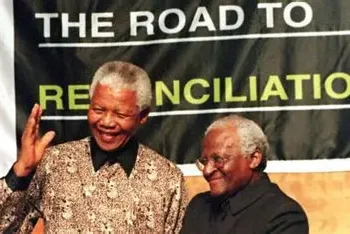
Lessons to learn from the Truth and Reconciliation Commission in South Africa: Its successes and failures
Lessons to Learn from the Truth and Reconciliation Commission in South Africa: Its Successes and Failures Abstract The Truth and Reconciliation Commission (TRC) of South Africa (1995–2002) remains one of the most significant transitional justice experiments of the late twentieth century. Established to address the atrocities of apartheid, the Commission sought to uncover truth, foster reconciliation, grant amnesty in exchange for full disclosure, and recommend reparations for victims....
Read more
Church Highlights Failings in Reparations for the Victims of Forced Displacement During Apartheid
During apartheid, there were a lot of forced displacement or land grabbing and the victims of the forced displacement have approached the Church seeking support in their cause for justice. The government established a program for the reparation for internally displaced people during apartheid but this program is in a state of a crisis. In this article, we describe the crisis. The reparation program is facing a...
Read more
Survivors of apartheid’s atrocities and families of those murdered sue the government for the state’s failure to prosecute perpetrators
On 20 January 2025, twenty-five survivors and families of victims who were forcibly disappeared or killed during South Africa’s fight for democracy have filed a court application against the President and the government. They are seeking constitutional damages for the government’s gross failure to adequately investigate and prosecute apartheid-era political crimes following the Truth and Reconciliation Commission (TRC) process. The suppression of post-TRC accountability efforts has allowed witnesses...
Read more
The Vatican Dicastery for Promoting Integral Human Development releases a document on ecological debt and reparative justice
Jubilee 2025: Remission of the Ecological Debt In recent decades, the concept of ecological debt has emerged as an effective means of interpreting environmental injustices on a global scale. Traditionally, the term ‘debt’ has been associated with the financial condition of many developing countries indebted to industrialised economies. However, this perspective overlooks a fundamental aspect: throughout history, on the one hand, the most industrialised countries have been responsible...
Read more
Government must take plight of small scale farmers seriously during Covid-19
The proposed R500 billion stimulus package, which President Cyril Ramaphosa announced last month, intends to lessen the financial impact of Covid-19 while bolstering our economy and making it more resilient to future crises. Small-scale and subsistence farmers, an often-forgotten group despite comprising 2.5 million individuals, are among the emergency relief beneficiaries. According to the policy Brief 55 by the Institute for Poverty, Land and Agrarian Studies of the...
Read more